Day 2 · 20 October 2026
Production landscapes can count towards 30x30, but recognition depends on evidence, consent and costs communities may not meet
Highlights
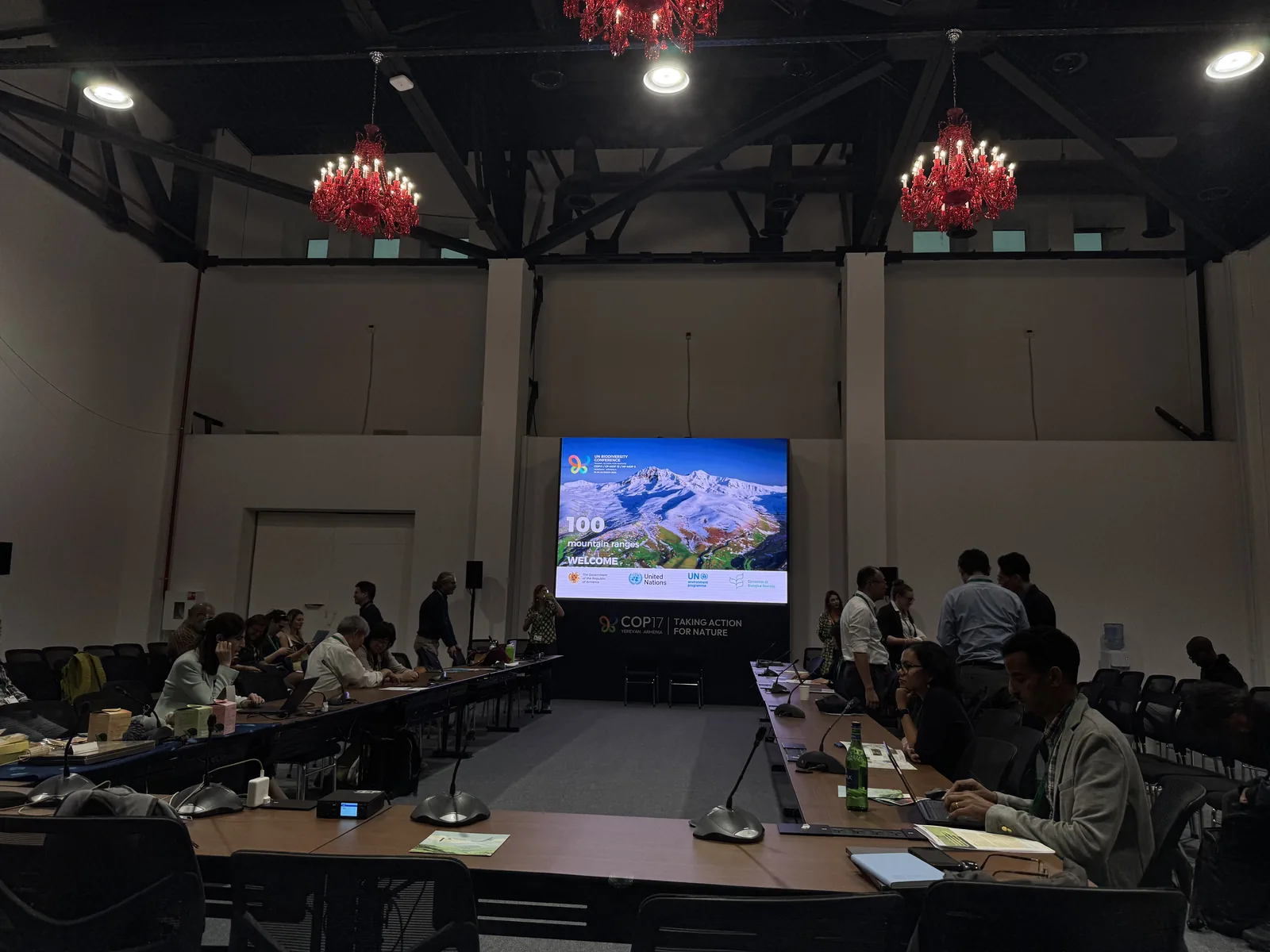
What happened: At a COP17 side event on 20 October, IUCN, UNU-IAS, the CBD Secretariat, Japan's environment ministry and partners discussed how working landscapes and seascapes can contribute to Target 3 through OECM recognition.
Why it matters: A site needs clear boundaries, site-specific evidence and consent, and speakers pointed to mapping costs, administrative burdens and gaps in long-term monitoring as barriers.
A nationally certified site of forests, terraced rice paddies and ponds in Kobe, Japan, covers about 180 hectares. According to Kobe City, the site gained international OECM registration in August 2024. In Shabunda, in the Democratic Republic of the Congo, a landscape of tropical forest, farms and wetlands that supports African forest elephants is a "potential" OECM, with formal assessment still to be confirmed.
The contrast, drawn from cases in a new handbook presented at COP17, carries the session's main point. Landscapes where people farm, fish and live can count towards 30x30, but recognition depends on a working process for assessment and reporting, not only on what is on the ground.
The session
"People, Culture and Biodiversity: Advancing Area-based Conservation Potential in Socio-Ecological Production Landscapes and Seascapes (SEPLS)" was held from 18:15 to 19:45 on 20 October 2026.
Co-organisers were the International Union for Conservation of Nature (IUCN), its World Commission on Protected Areas, the United Nations University Institute for the Advanced Study of Sustainability (UNU-IAS), the CBD Secretariat, Japan's Ministry of the Environment and the UNDP GEF Small Grants Programme.
SEPLS are mosaics of ecosystems and human uses. A single landscape or seascape may include forests, farms, wetlands, settlements, coastal habitats and fishing grounds, each with different stewards and rules.
The Satoyama Initiative, started by United Nations University and Japan's environment ministry, promotes this approach. Its partnership, IPSI, was launched at CBD COP10 in 2010 and reported 359 member organisations in July 2026.
How a landscape becomes an OECM
An other effective area-based conservation measure (OECM) is a defined site outside a protected area whose governance and management deliver positive, lasting outcomes for biodiversity. Conservation can be the main goal, a secondary goal or a sustained result of other management. One landscape can therefore hold a protected forest, a community-managed river reach that qualifies as an OECM, and production areas under other arrangements.
Each proposed OECM needs clear boundaries and site-specific evidence. According to the session summary, assessment considers how the site is governed and managed, the evidence for sustained conservation, and the consent of the governing authorities and rights holders. The IUCN site-level tool calls for free, prior and informed consent (FPIC) from Indigenous Peoples and local communities where applicable. Sites that meet the requirements can be submitted to Protected Planet's World Database on Protected and Conserved Areas.
Rights guidance was still moving at the time. The voluntary guidelines on Indigenous and traditional territories were under negotiation during the side event, and COP17 later adopted them as the Sevan Guidelines.
What speakers said
Astrid Schomaker, Executive Secretary of the CBD, pointed to SEPLS as examples of people and nature thriving together. Yukihiro Haisa of Japan's Biodiversity Strategy Office said communities, businesses and other partners sustain these landscapes, and identified OECM recognition as one way qualifying sites could contribute to Target 3. Japan's national scheme certifies conservation efforts by a range of actors and gives eligible areas outside protected areas a route to be recorded as OECMs.
Ulrika Åberg of IUCN introduced Caring for Our Landscapes and Seascapes, a handbook by IUCN, UNU-IAS and IPSI that explains OECM assessment, governance, monitoring and reporting. Suneetha Subramanian of UNU-IAS presented a toolkit of 20 participatory resilience indicators in five areas, including governance and social equity. Some exercises compare current conditions with those about 10 and 50 years earlier. The toolkit can help communities document governance and track change, but a formal OECM assessment also needs site-specific evidence of biodiversity and of the effects of management over time.
On the panel, Rissa Edoo of the UNDP GEF Small Grants Programme stressed involving local actors throughout planning. Lu Zhi of Shan Shui Conservation Center and Yiching Song of Farmer Seed Network discussed how OECMs could support conservation based on Indigenous and traditional management. Paulina Karim of National Dong Hwa University and Engin Yılmaz of Yolda Initiative highlighted limited awareness, administrative burdens and the need for appropriate assessment and monitoring.
The cost of getting recognised
The handbook and panel named practical barriers: the cost of mapping and assessment, administrative demands, and gaps in the evidence and resources needed for long-term monitoring. Technical partnerships and sustained financing can help local stewards meet them.
The Kobe and Shabunda cases show why this matters. Kobe has a city government, private landowners, citizen groups, researchers and students working together, with a local conservation council. Shabunda has customary authorities, local government and community forestry institutions, and the handbook's comparison with IUCN criteria was an informal review of information from a local organisation.