Day 9 · 27 October 2026
Citizen science can feed national reporting, but only if the agencies that need the data help design it
Highlights
What happened: A COP17 side event asked who can take part in citizen science, how to make the data reliable and how findings reach people making conservation decisions.
Why it matters: A 2024 study cited in the session found that citizen participation could benefit 185 of 365 Global Biodiversity Framework monitoring indicators assessed, but that is a measure of potential, not delivery.
A 2024 study found that citizens could help collect data for 185 of the 365 monitoring indicators it assessed under the Kunming–Montreal Global Biodiversity Framework (KMGBF), or 51%. The audience quiz at a COP17 side event in Yerevan drew on that figure. It measures where participation is possible, not where it is happening, and the session spent its time on the gap between the two.
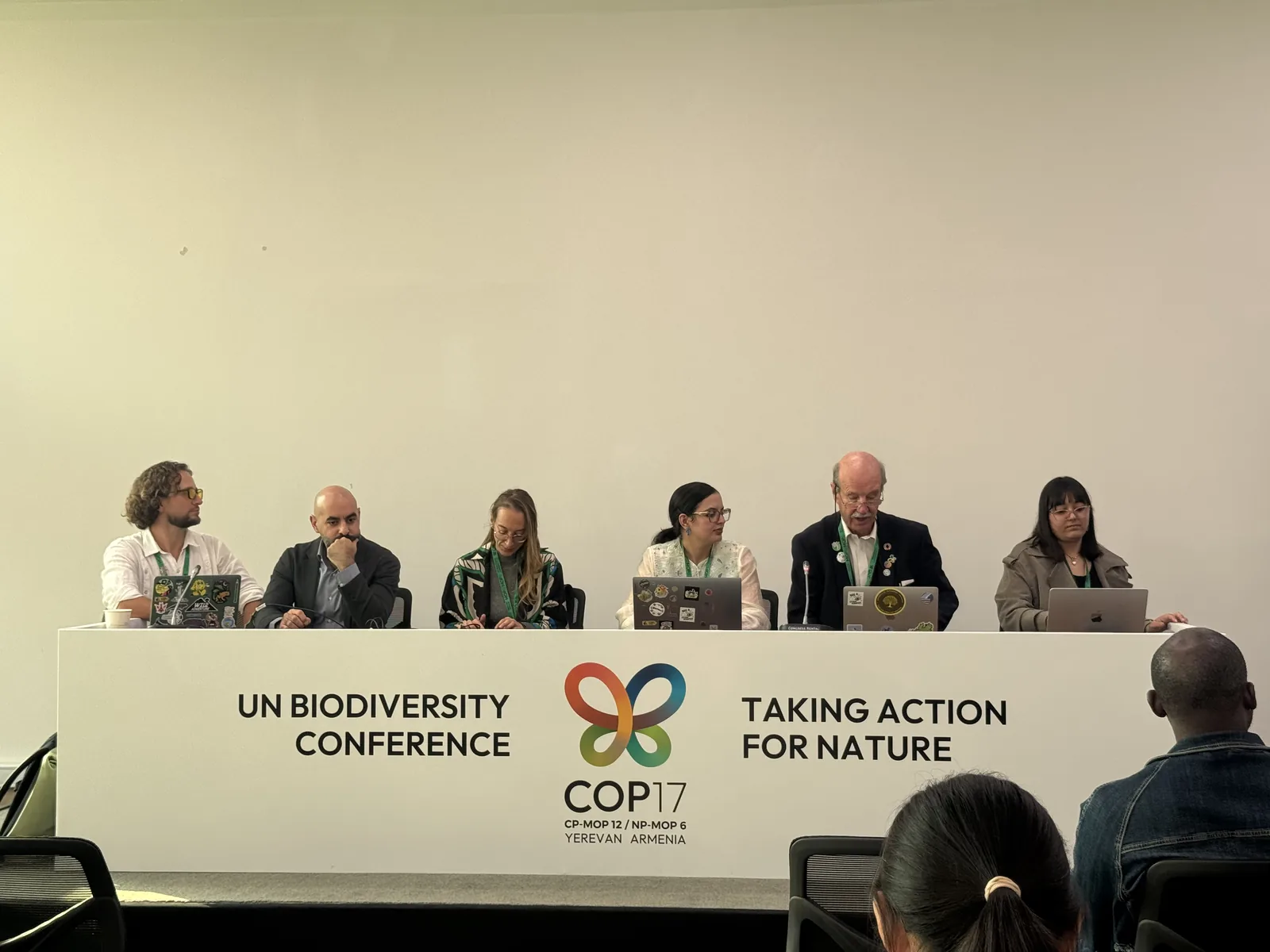
The session, "Next-Gen Citizen Science: Showcasing Inclusive Wins, Empowering the Global South and Charting the Future of Environmental Data" (side event #7848), took place on Tuesday 27 October 2026 at 15:00 local time in Vayk, Side-event Room 3, Blue Zone, Yerevan. Anukriti Sharma and Ram Dayal Vaishnav facilitated. The message from speakers was practical: citizen science reaches decisions when communities and the institutions using the data design it together.
What the framework asks for
The 2024 study assessed the scope for participation (Danielsen and colleagues, in Nature Sustainability), and the CBD has since updated the monitoring framework through Decision 16/31. CBD Decision 15/5 invites Parties and organisations to support citizen science and community-based monitoring and information systems. KMGBF Target 21 calls for the best available data, information and knowledge to be accessible for biodiversity decisions. It adds that access to the traditional knowledge of Indigenous Peoples and local communities requires their free, prior and informed consent, in line with national legislation.
Scale, and why people stay
Martin Brocklehurst of the Citizen Science Global Partnership described how community observations could inform national datasets and reporting, and presented the Global Biodiversity Information Facility (GBIF), an open data network, as a way to share suitable records. The keynote cited eBird, iNaturalist and Mosquito Alert as examples at scale. Cornell announced in August 2025 that eBird had reached two billion sightings, and iNaturalist reported four million people with verifiable observations and nearly 300 million observations in January 2026.
Brocklehurst argued that participants stay involved when they get something back, such as identification help or feedback on how their data was used, and called for proper attribution and protection of contributors' rights. A 2015 study estimated that volunteers contributed between US2.5 billion a year in kind across 388 projects, a measure of the value of their time, not of data quality.
Designing for use
Garabet Kazanjian of the American University of Armenia argued for simple, comparable methods, clear metadata (information describing how and where data was collected) and quality checks. He recommended involving public authorities at the design stage, so they can say what evidence they need. He also highlighted observations from fishers and divers and cited CS-MACH1, a project connecting marine citizen-science observations with larger data systems.
The session also described Armenia's RIVERS project, in which ten schools from Gegharkunik took weekly water measurements from spring 2025 and presented findings to community representatives in November. The project aimed to give students a role in monitoring waterways in the Lake Sevan basin.
From India, Vaishnav described the Hyderabad Annual Tree Biodiversity Survey, led by WWF-India's Hyderabad office, whose published 2024 dataset has 967 occurrence records. He also cited the State of India's Birds partnership, whose tool lets users explore eBird records within a custom boundary, and the Campus Biodiversity Register, run by the Nature Conservation Foundation and India's National Biodiversity Authority.
Who gets counted
Giulia Marzetti said storytelling, photography and sound give people several ways to take part, using examples from Modena and Glasgow. She suggested modest compensation could make projects accessible to people who would otherwise struggle to join. Fatima El-aaraby of the CBD Women's Caucus argued that women already generate substantial biodiversity knowledge and that monitoring should make it visible, with training and accessible language. Pablo Arturo López Guijosa urged teams to explain what findings mean locally, return results to contributors and link them to planning and reporting.
Proposals, not decisions
Brocklehurst called for governments to fund citizen science and build it into national monitoring, citing South Africa's 2015–2025 biodiversity strategy and action plan, which recognised it as part of the knowledge base. He urged support for a citizen-science resolution at the eighth UN Environment Assembly (UNEA-8, scheduled for 6–10 December 2027 in Nairobi) and for a high-level UN expert committee proposed in the Partnership's charter. These were advocacy proposals raised in discussion. The session reached no decisions.