Day 5 · 23 October 2026
Farmers will change practices when advice, finance, rules and markets line up, COP17 panellists argued
Highlights
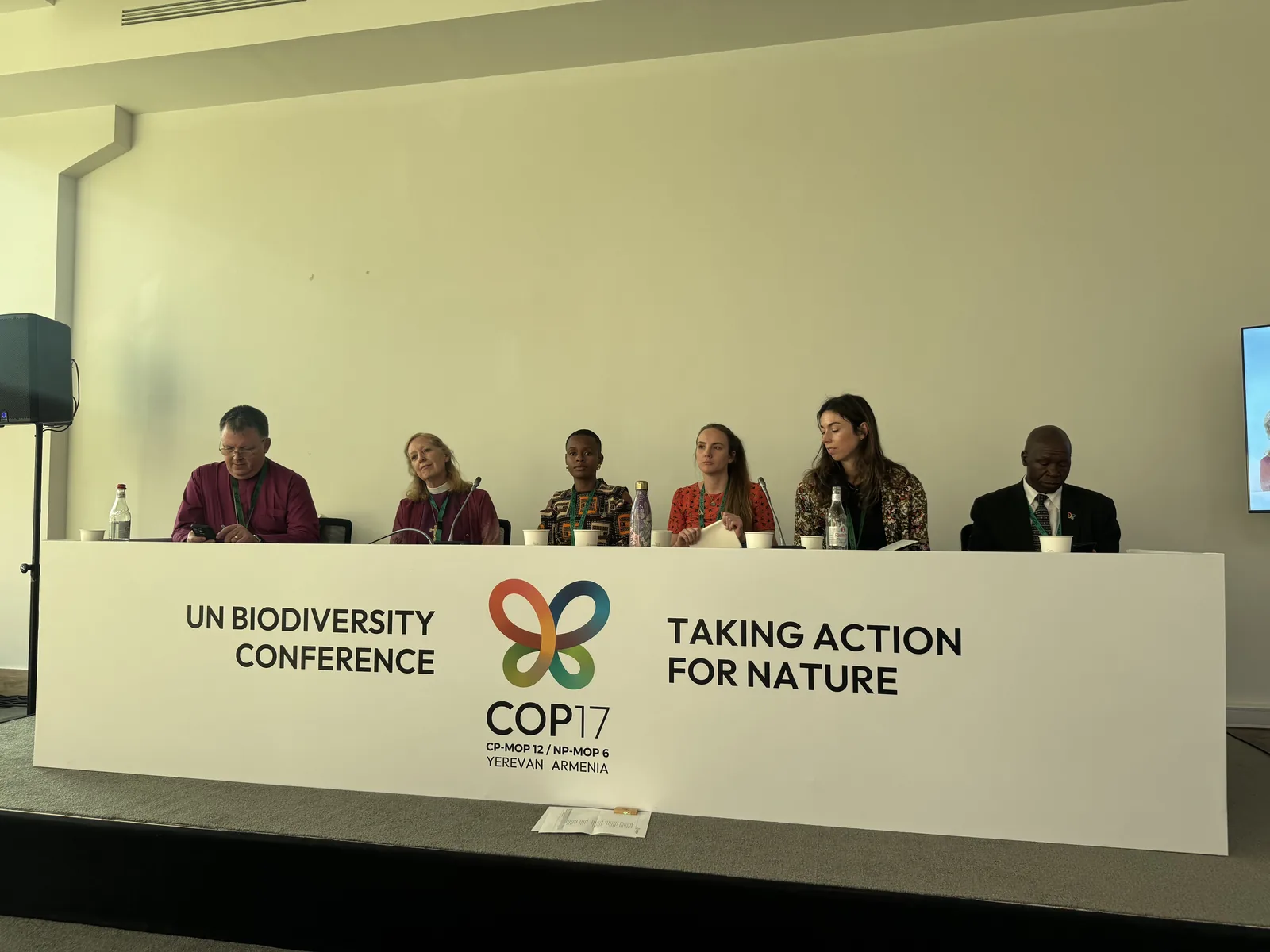
What happened: At a COP17 side event, church, business and government speakers from England, Kenya and the United States described what farmers need to protect soils, water and biodiversity while still producing food.
Why it matters: The panel kept returning to four needs: trusted farm advice, finance that shares cost and risk, consistent policy and buyer requirements, and markets that pay fairly and on time.
On 22 September 2026, the second application window for England's 2026 Sustainable Farming Incentive closed after five hours and 48 minutes. The notes of a COP17 side event cite it as an example of how uncertain public support can be for farmers who are being asked to change how they farm.
The panel's main point was that farmers will not shift to practices that protect soils, water and wildlife unless four things line up at once. They need trusted advice, finance that shares the cost and risk of transition, consistent rules from governments and buyers, and reliable markets that pay producers fairly and on time.
The session, "Agriculture, Business and Biodiversity Restoration" on 23 October 2026.
Farm advice is thin where it is needed
Mary Okeno of the Anglican Church of Kenya said that in her part of western Kenya, one agricultural extension officer served roughly 15,000 households. She proposed grants for smallholders, training for young people and women who can share knowledge, school 4-K agricultural clubs, and church youth and women's groups organised into cooperatives that could manage funds and sell produce together.
In England, Laura Moss-Bromage of the Church Commissioners said the church's investment body, which holds around 80,000 acres of farmland, works with the Farming and Wildlife Advisory Group (FWAG) to give incoming tenants advice on biodiversity and food production. She cited a target of 80% of tenants adopting at least some regenerative practices. The notes record that as a target, not a result.
Who carries the cost of change?
Moss-Bromage said farmers often carry the upfront costs and risks of changing practices while the benefits go to buyers and the public. She cited three to five years as an indicative period before some regenerative practices pay off, which sits uneasily with annual budgets and contracts. She described slow uptake of a supply-chain emissions scheme paying £60 per tonne of carbon dioxide equivalent, with farmers asking about contract terms and combining payments from different schemes.
John Maina, described in the notes as a senior Kenyan livestock official, pointed to Kenya's tools for rural finance, including a green finance taxonomy issued by the Central Bank of Kenya in April 2025 and a credit guarantee scheme that shares lending risk. He also stressed that pastoralists need secure tenure and the ability to move livestock across rangelands.
Rules and markets need to be consistent
Rosie Sibley of Preferred by Nature said companies face different demands from buyers, investors and regulators, and that shifting regulatory timetables can disadvantage businesses that invested early.
The EU has postponed its Deforestation Regulation, so most obligations now begin on 30 December 2026 for large and medium operators and 30 June 2027 for most micro and small ones, according to the Council of the European Union. Sibley also raised tree tenure in Ghana, where planted trees generally belong to the planter but the state controls economic rights in naturally occurring timber, and argued for joint design of projects with farmers and communities.
Bishop Cathleen Bascom, who coordinates the Episcopal Church's eco-region networks, described ranchers in the US grasslands trying rotational grazing inspired by bison movement, prescribed burning and beaver-inspired structures to slow water. These were examples from particular landscapes. She also called for more outlets for sustainably produced food.
What the panel proposed
The notes list proposals, not decisions. Governments, advisers and faith communities should widen access to trusted advice. Buyers should share transition costs, give dependable contracts and pay on time. Lenders and agencies should provide grants, credit and insurance on timelines that match farm transitions.
Regulators and buyers should align requirements and involve producers in setting them. The discussion left open how to value environmental improvements beyond greenhouse gas cuts. The notes record no formal resolutions, and end before audience responses.