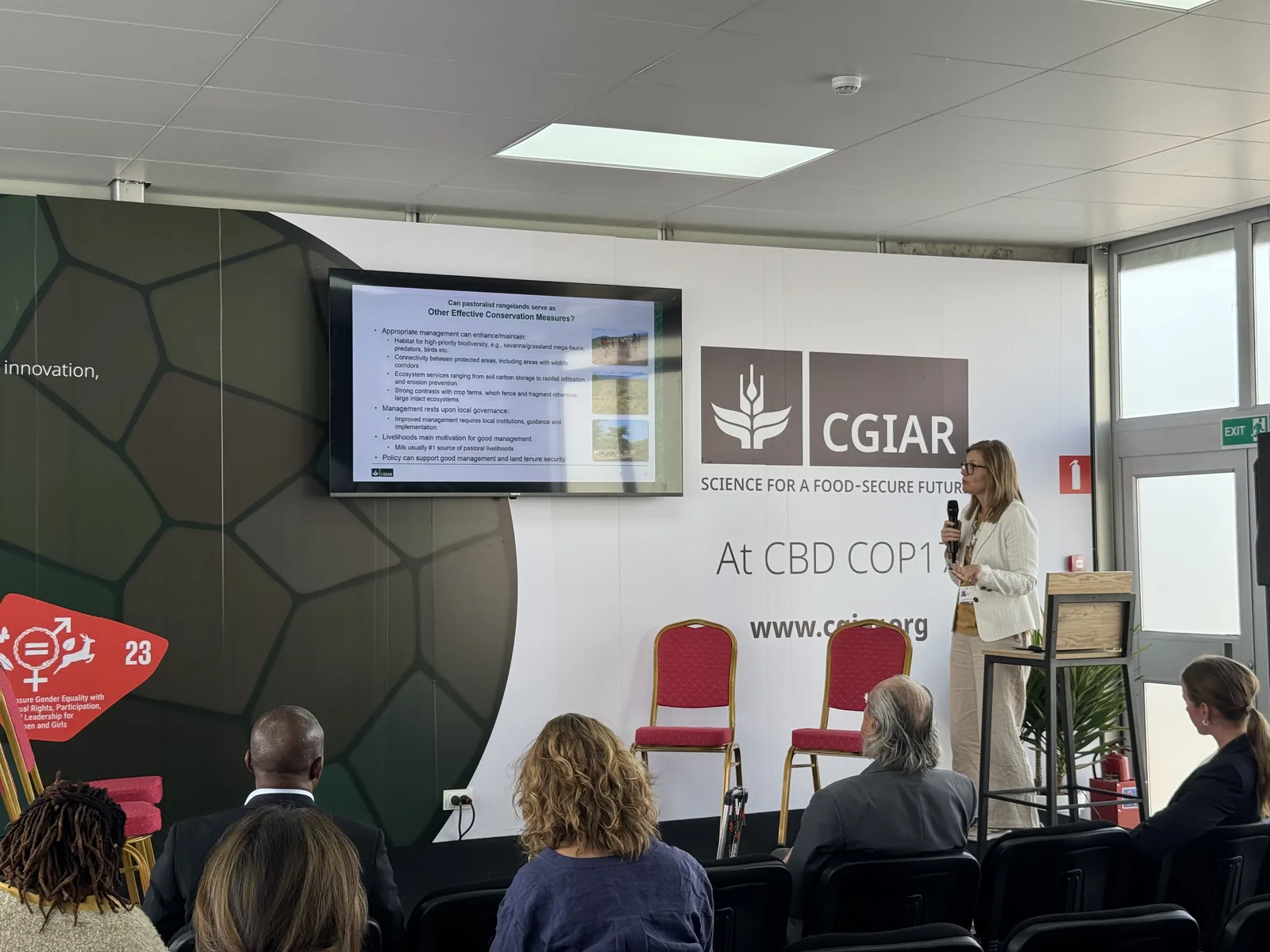
Day 5 · 23 October 2026
Grazing, ranching and hunting grounds can qualify as OECMs, but only if the evidence shows outcomes that last
Highlights
What happened: At a COP17 session on 23 October, presenters described pastoral rangelands in Kenya and Tanzania, cattle ranching in Paraguay and Colombia, and community hunting territories in Gabon as possible other effective area-based conservation measures (OECMs).
Why it matters: The notes stress that sustainable production can fit an OECM only if a site shows sustained biodiversity outcomes and the people who hold rights there consent.
In Gabon's Mulundu department, villagers and hunting associations worked with researchers to map 10 hunting territories, some overlapping timber concessions. The map has won informal administrative recognition, according to the presenter. It has not yet answered the question that matters for 30x30: can these territories keep wildlife in place for the long term?
That tension runs through a COP17 session on working landscapes. Farming, grazing and hunting can sit inside an OECM, meaning an area outside a protected area that is governed and managed to deliver lasting biodiversity benefits. But the label does not do the work. Boundaries, governance, consent and evidence do.
The session "Pastoralist rangelands as candidate OECMs and agroecological systems”, took place on 23 October 2026 from 12:30 to 13:30 in the Blue Zone at the Food & Agriculture Pavilion.
What counts as an OECM
Under CBD Decision 14/8, an OECM is a geographically defined area outside a protected area where governance and management produce positive, sustained, long-term outcomes for biodiversity in place. The IUCN site-level assessment tool uses eight criteria. Criterion 6 asks whether important biodiversity values are conserved through governance and management, and Criterion 7 asks whether those outcomes are likely to last. According to the notes, sustainable production is compatible with an OECM where a site meets the criteria and rights holders and governing authorities consent.
Rangelands in East Africa
The first presenter, who is not named in the notes, said customary grazing arrangements, seasonal livestock movement and locally agreed rules can maintain pasture condition and wildlife connectivity. Healthy vegetation and soils can also retain carbon, improve water infiltration and reduce erosion. The presenter linked this to agroecology, the use of ecological principles in farming, and highlighted grazing plans that respond to rainfall, secure tenure and stronger local institutions.
The examples were Olkiramatian and Shompole in Kenya's South Rift, Enonkishu in the Greater Mara, and three Tanzanian Wildlife Management Areas: Randilen, Enduimet and Makame. The notes add two cautions. Protected Planet lists Enduimet and Makame as protected areas, which would put them outside the OECM definition, and the Kenyan sites would need site-level assessment. The presenter also suggested prioritising moderately degraded land for early restoration, while noting that costs and benefits vary by site.
Ranching on native grassland in Latin America
In Paraguay, six families in Buena Vista, in the Pantanal, raise cattle on about 1,800 hectares of natural pasture, according to FAO. The notes say the families have avoided clearing forest for pasture and use palm leaves as feed in droughts, with WWF supporting pasture management and biodiversity monitoring.
In Colombia, the presentation described two sisters combining extensive ranching, ecotourism and beekeeping on a farm that belongs to an association of 23 landowner families. Its registration status is unverified. The presenter named conversion of savannas to rice and oil palm as a pressure in the Orinoco basin.
At regional level, WWF and partners reported in October 2026 that 14 countries in Latin America and the Caribbean have put OECMs into national strategies or other policies. Paraguay included them in its 2025–2030 strategy, but the assessment found no dedicated regulatory framework and no OECM sites reported to Protected Planet as of July 2026.
Gabon's hunting territories
In Mulundu, the Sustainable Wildlife Management Programme supports community hunting associations, local monitoring and a legal, traceable wild-meat supply chain. CIRAD coordinates field activities with the associations and Gabon's Ministry of Water and Forests. Public reporting confirms 10 community groups across 25 villages. The programme uses free, prior and informed consent (FPIC), the principle that communities must agree before projects affecting their land proceed.
On 8 October 2026, Gabon's Council of Ministers took note of the 2026–2030 National Strategy for the Management of Hunting and the Wild Meat Trade. FAO identifies gaps in communities' formal rights to manage wildlife in their territories. The unresolved question for OECM assessment, the notes say, is whether community governance and any deals with concession holders can sustain biodiversity over time. IUCN guidance says long-established customary rights can help show durable governance, and the notes add that evidence on wildlife trends would help assess each territory.