Day 8 · 26 October 2026
Joint planning could cut restoration costs by up to 17% in Mongolia, a pilot suggests, if budgets and data are shared
Highlights
What happened: At a COP17 side event on Rio Convention synergies, researchers and officials presented a Mongolian pilot that asks whether joint land-use planning across the biodiversity, desertification and climate conventions can make restoration cheaper and better targeted.
Why it matters: The pilot's estimates, presented as modelled figures and not results, put potential efficiency gains at up to 17%, around US$1.2 billion, and found that transaction costs took around 40% of project costs in the projects reviewed.
Restoring Mongolia's degraded land would cost an estimated US$8.66 billion, according to a pilot assessment presented at a COP17 side event in Yerevan. The same assessment estimates that doing nothing costs the country US$2.5 billion a year, that 94% of the degraded areas assessed would be economically viable to restore over 30 years, and that each dollar invested would return US$1.77 on average, breaking even after nine years.
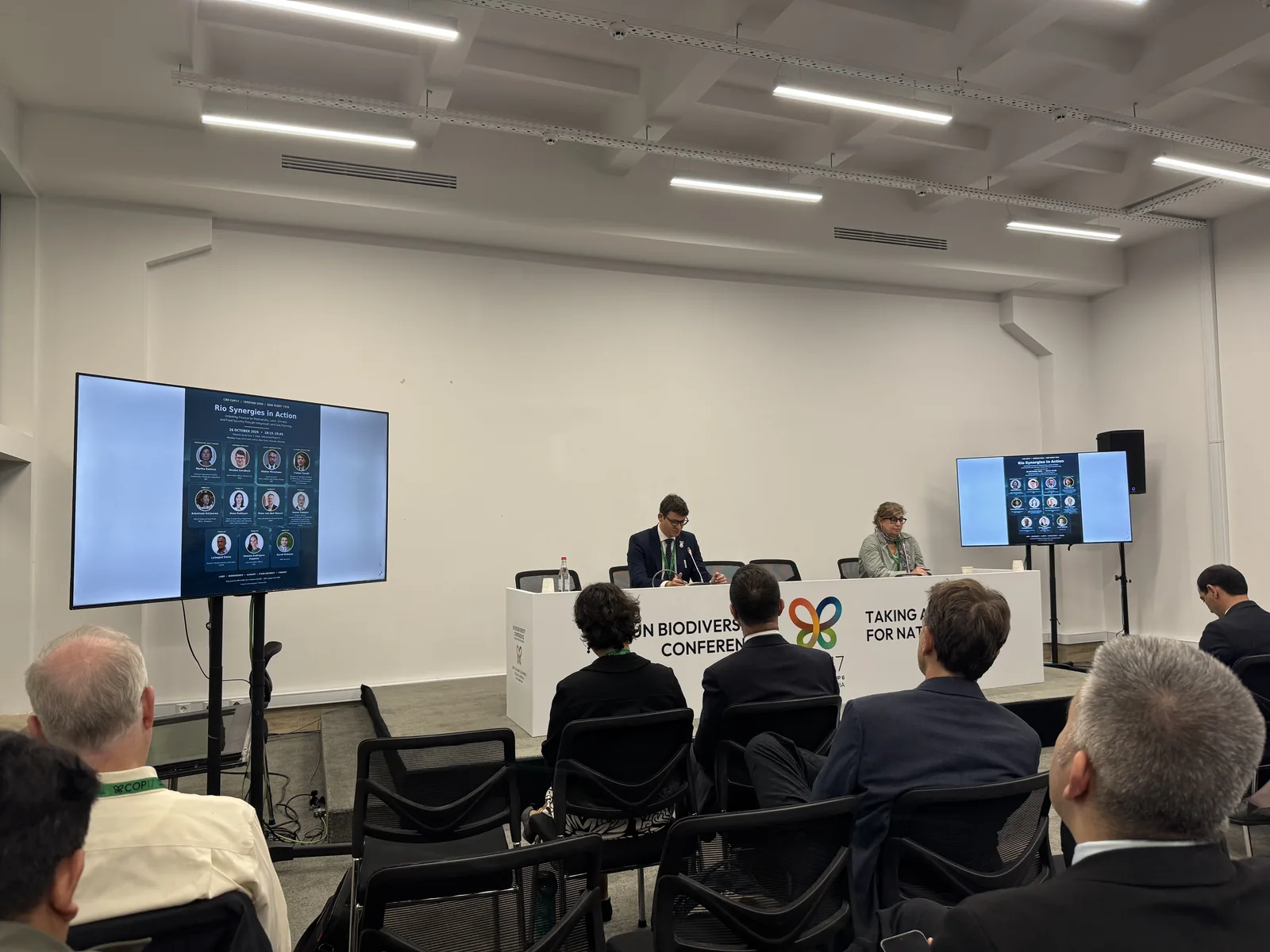
These are model estimates, first published in the Economics of Land Degradation (ELD) Initiative's summary of the pilot and presented earlier at the desertification convention's COP17 in Ulaanbaatar. The session's main point was that these costs can be lowered, and decisions improved, if countries plan restoration once across the Rio Conventions instead of three times. The session, "Rio Synergies in Action: Unlocking Finance for Biodiversity, Land, Climate, and Food Security through Integrated Land Use Planning", ran on 26 October 2026 from 18:15 to 19:45 Yerevan time in Vayk, Side-event Room 3, Blue Zone, Meridian Expo and Event Centre, Yerevan.
What the Mongolia pilot did
Dr Alisher Mirzabaev of the International Rice Research Institute (IRRI) presented the assessment, which mapped land degradation and looked at where restoration could yield the greatest benefits. It weighed ecosystem services against costs such as establishment, maintenance, land-use opportunity costs and administration. The project was commissioned by Germany's development ministry (BMZ) and combined ELD's economic methods with FAO guidance on integrated land-use planning. It builds on earlier assessments in Rwanda and Central Asia.
Rangelands cover roughly 70% of Mongolia, which recorded about 58.1 million head of livestock at the end of 2025. For them, the presentation proposed intensive measures, such as grazing infrastructure, in severely or moderately degraded areas, and improved grazing management across larger areas of mild degradation. It stressed funding maintenance and using field observations of vegetation composition alongside productivity measures. Mongolia's 2026–2030 national biodiversity strategy and action plan calls for restoring at least 30% of degraded ecosystems by 2030.
Where the savings would come from
The presentation estimated potential efficiency gains from integrated delivery of up to 17%, equivalent to around US$1.2 billion in savings or additional restoration. It also reported transaction costs of around 40% of project costs in existing and past projects reviewed. Shared training, monitoring, reporting and verification, and better data management were named as ways to reduce duplication, and a shared repository could keep project records for future projects.
What the panel added
Ariuntuya Dorjsuren of Mongolia's Ministry of Environment and Climate Change described the difficulty of aligning sector budgets with shared land priorities. She discussed cross-ministry budget reviews, reform of harmful subsidies, private finance and sustainable value chains, and cooperation with local authorities and pastoralists beyond individual project cycles.
Onno van den Heuvel of UNDP said economic and spatial evidence can inform specific decisions on fees, agricultural lending and insurance. Lulseged Tamene Desta of CGIAR outlined an assessment that begins with the location and condition of land assets, then considers costs, beneficiaries, trade-offs and who bears risk, and noted that financial assessments can overlook local cultural value.
İbrahim Yamaç of Türkiye's UNFCCC COP31 Presidency described the Rio Synergies Group for Action, developed with the Armenian and Mongolian presidencies. Participation is voluntary, with no new negotiated obligations or reporting requirements. A high-level dialogue followed in Yerevan on 27 October, and IUCN reports that the group was launched at COP31 in Antalya on 17 November 2026.
Proposals, not decisions
Panellists discussed aligning government budgets, sharing monitoring and data systems, tailoring rangeland investment to degradation severity, and funding maintenance after restoration. They also stressed making trade-offs visible and involving land users in decisions about who benefits and who pays. The record shows no formal decisions by the side event.