Day 3 · 21 October 2026
Ocean targets cover the sea on paper, but the data to show whether reefs, mangroves and seagrass are recovering is thin
Highlights
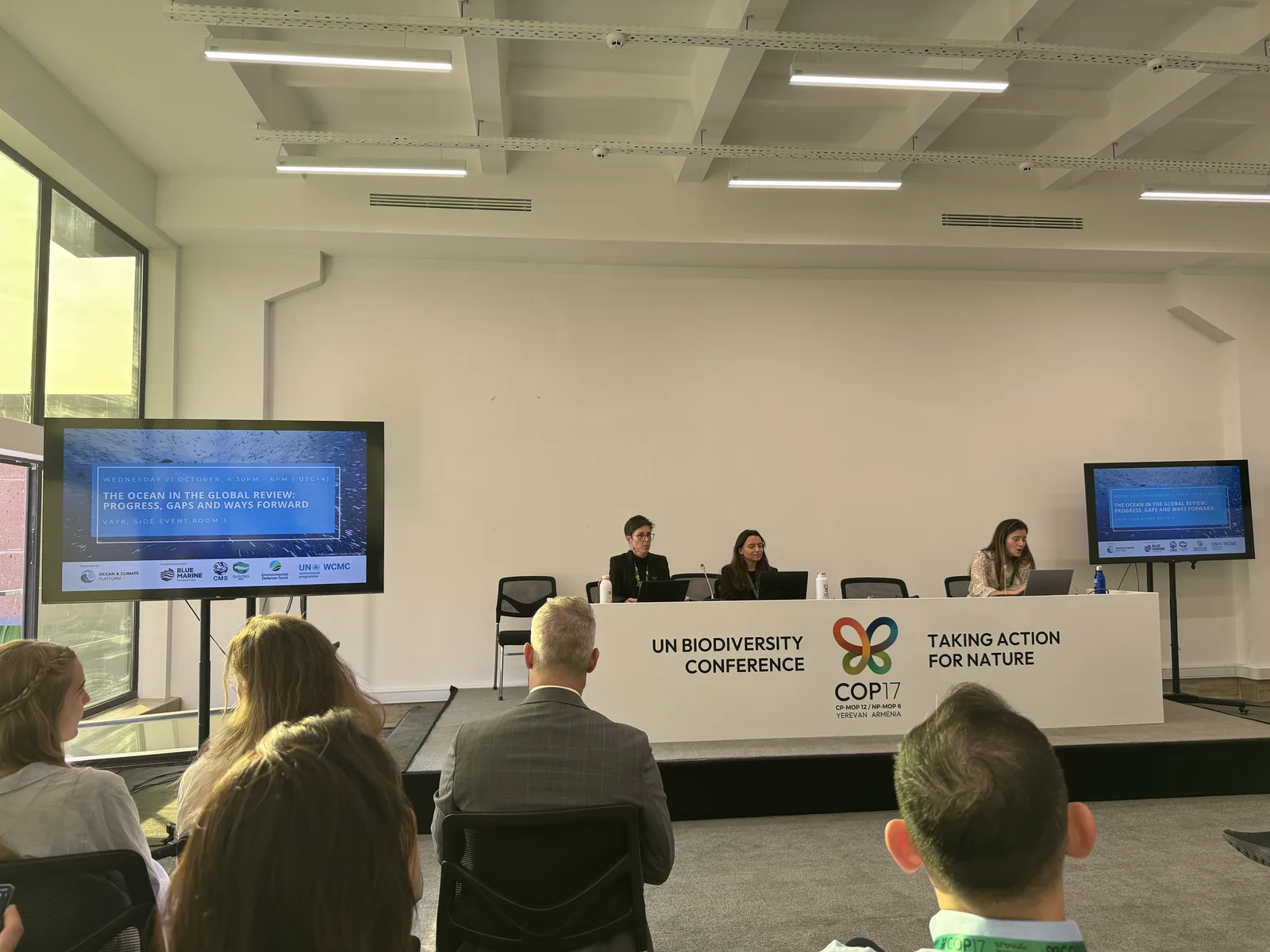
What happened: At a COP17 side event on 21 October, the Ocean & Climate Platform and partners reviewed how marine and coastal biodiversity featured in the first Global Review of the biodiversity framework, and COP17 later said marine and coastal ecosystems had received less attention in national plans and reports.
Why it matters: Marine protected areas cover more than 10% of the ocean, but one assessment classes only 3.1% as fully or highly protected.
More than 10% of the global ocean is covered by marine protected areas, the Ocean & Climate Platform (OCP) told a COP17 side event. A September 2025 assessment that it cited classified only 3.1% as fully or highly protected, and a separate 2026 report estimated that 3.5% was effectively protected.
The gap between the two kinds of number is the session's main point. Targets that count area are easier to report than targets that show whether ecosystems are healthy, and the ocean's reporting shows it.
The session
"The Ocean in the Global Review: Progress, Gaps and Ways Forward" was a COP17 side event held on Wednesday 21 October 2026 from 16:30 to 18:00.
OCP convened it with Blue Marine Foundation, Environmental Defense Fund, UNEP-WCMC, and the Convention on Migratory Species (CMS) and its Dugong Memorandum of Understanding.
What the Global Review found
The moderator noted that none of the 20 Aichi Biodiversity Targets was fully achieved globally. The first review of the Kunming–Montreal Global Biodiversity Framework (KMGBF) took place at COP17, and the second is scheduled for COP19 in 2030. The CBD global report found:
45 countries or territories had approved marine spatial plans by the end of 2023.
69% of non-landlocked Parties had national targets addressing marine and coastal restoration to some extent.
72% had targets on marine and coastal protected areas and other effective area-based conservation measures (OECMs) to some extent.
32% of Parties had targets on ocean acidification.
The percentages describe how far national target-setting reaches, not results. The report also found marine restoration less advanced than terrestrial restoration, and that management effectiveness, ecological connectivity and equitable governance got less attention than area coverage. On risk, speakers cited estimates that 44% of reef-building coral species and 37.5% of sharks, rays and chimaeras are threatened.
Extent versus condition
Mangroves show the problem. The Mangrove Breakthrough, launched at UN climate COP27, aims to mobilise US$4 billion to protect and restore 15 million hectares by 2030. Global Mangrove Watch estimates a net gain of about 477 km² in extent between 1985 and 2025. But old-growth mangroves continue to be lost in many regions, new forests take decades to match them, and IUCN classified half of assessed mangrove ecosystem units as vulnerable, endangered or critically endangered.
Coral reefs tell a similar story. The Global Coral Reef Monitoring Network's seventh assessment found average hard coral cover fell from 30.2% in 1980–2009 to 27.3% in 2020–2024, a 9.5% relative decline. Four of its ten regions showed long-term declines, four no net change and two increases. Marine heatwaves drive major losses, and shorter gaps between bleaching events limit recovery.
| Breakthrough | Launched | Aim by 2030 |
|---|---|---|
| Mangrove | UN climate COP27 (2022) | US$4 billion; 15 million hectares |
| Coral Reef | Not stated in notes | US$12 billion; secure at least 125,000 km² of shallow reefs |
| Seagrass | UN climate COP28 (2023) | US$12 billion; 16 million hectares |
Money, monitoring and the COP17 outcome
On finance, the Mangrove Catalytic Facility is designed to help projects overcome investment barriers, using technical assistance grants, guarantees and concessional loans. For seagrass, a dedicated financing facility and investment plan were discussed as proposals. Panellists called for sustained funding for ecological monitoring, clearer measures of restoration and management effectiveness, and better tracking of biodiversity finance.
The side event produced no formal decisions. In the later Yerevan Pathway, COP17 recognised that marine, coastal and inland water ecosystems received less attention in national plans, targets and reports. It identified these as gaps Parties may address when updating their strategies, in line with national circumstances.